The New Warrior’s Cry: Veni Vidi Vigilo – I Came, I Saw, I Protect

First published in the Huffington Post, September 8th, 2015

Since Julius Caesar pronounced his famous words, “Veni, Vidi, Vici” — “I came, I saw, I conquered” — it has been the mantra for financial progress, military victory, and sexual success.

But a few months ago, Pope Francis eloquently and convincingly called for a different relationship to our common home: “Each community can take from the bounty of the earth…but it also has the duty to protect the earth and to ensure its fruitfulness for coming generations.” Many other spiritual and secular leaders have echoed his sentiments.

As a secular Jewish fan of the Pope, and with a big dash of chutzpah, I’d summarize his proposed paradigm as follows:
Veni, vidi, vigilo.
I came, I saw, I protect.

“Veni, Vidi, Vici” has delivered us to the precipice of a planet where chaos looms. Conquering and dominating nature guides most commerce and development in the world. From Arizona to Dubai, we build where there is no food and water as if we can just overcome the problem, and eat and consume goods as if they are inexhaustible resources useful for our pleasure and convenience alone.

There is another way.

Veni, vidi, vigilo demands that we notice our surroundings, both natural and manmade, and take responsibility for our place in the picture. “Vigilo” in Latin has two meanings: “I protect” and “I keep watch.” Just as eternal vigilance is the price of liberty, keeping watch over our common home is the price of our survival. This new paradigm holds the keys to a habitable planet where plenty has a new meaning and our children and grandchildren have a shot at a stable world.

Winona LaDuke, the Native American leader, defines a warrior
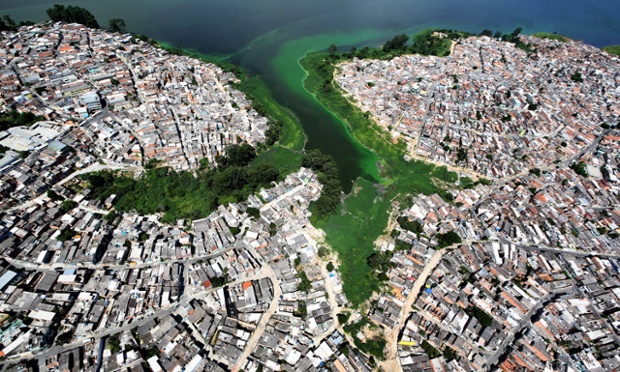
Why Brazil’s megadrought is a Wall Street failure

First published in the Guardian on April 10th, 2015

It’s hard to overestimate the appalling environmental and economic crisis that’s brewing in Brazil right now. The country is in the grip of a crippling megadrought – the result of pollution, deforestation and climate change – that deeply threatens its economy, society and environment. And the damage may be permanent: São Paulo, Brazil’s largest city and industrial center, has begun rationing water and is discussing whether or not it will need to depopulate in the near future.

But if Brazil’s drought is shocking, Wall Street’s shortsighted approach to the country is appalling. Institutional investors’ reports on the country – the seventh largest economy in the world – cite worries about inflation, government cutbacks and low consumer confidence. But I could not find a single analysis that mentioned the existential threat facing the country: the megadrought that is expected to last decades and could destroy the Brazilian economy. Not a single analysis cited the brutal global impact that this will cause.

In other words, a host of institutional investors have found worrisome things to say about Brazil, but none seem to be aware of – or, at least, willing to face – the country’s greatest threat.

Attempting to separate economies from environment – as many of these analysts seem to do – is like trying to separate mind and body. It simply doesn’t work.

We will never repair our business models and government policies to conform to the real environmental constraints of the 21st century until we repair this fundamental flaw in our economic system. Investors and analysts regularly review a host of factors – including national debt, inflation,

From antibiotics to fossil fuels: the inconvenient truth about sustainability

First published in the Guardian on April 6th, 2015

Humans are predictable. We routinely create extraordinary things and then disregard their impact and consequences because of our desire for convenience, comfort or profit. It’s easy to see why we’d want to take the shortsighted view: these pleasures and conveniences are compelling, at least until we realize they’re inflicting death by a thousand cuts on the world that we inhabit.

What do these extraordinary things look like? Well, antibiotics is a prime example. As someone who survived a dozen cases of childhood strep throat – not to mention surgery several months ago – I am eternally grateful for these drugs. Then again, while antibiotics saved my life after my surgery, the fear of an antibiotic-resistant infection propelled me to get out of the hospital as quickly as possible. These all-too-common infections, which are caused by our overuse of antibiotics, plague health care facilities around the world, driving up costs and mortality rates.

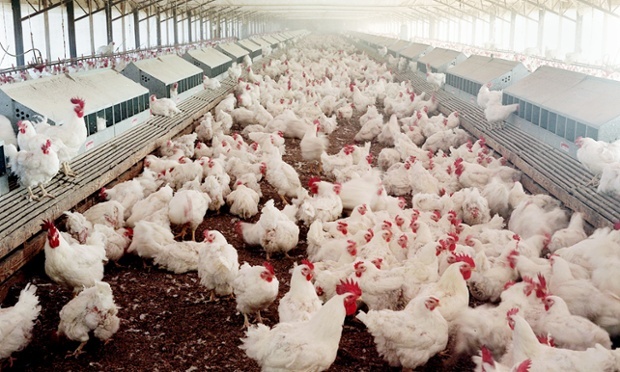
The problem extends well beyond hospitals: 80% of antibiotics in the US are used to induce rapid growth in healthy animals, and 95% of our meat is full of them. Meanwhile, unnecessary antibiotic use for common colds and respiratory infections also helps spur antibiotic-resistant infections.

The companies that produce and sell antibiotics are ignoring their collateral damage, dangers that they have known about for decades.

It’s time to sharpen our wits and use our intellect to overcome our basest instincts and reinvigorate our survival instinct. The only way companies will stop overselling these products is if we stop over-buying them.

Health-conscious consumers are already pressuring producers and retailers to eliminate

Togetherness Interruptus: Civil Society in the Age of the Smartphone

First published in The Huffington Post, December 12th, 2014

Every business and government speaks of “civil society” on a regular basis. It is the euphemism for engaging with the nonprofit world. But there is another meaning for the phrase “civil society.” It means being civil to one’s neighbors and strangers on the street, and nurturing a social environment — in real time and space, not on an electronic device. One of the most troubling default behaviors that we have recently come to accept is that most of us (myself included) spend less and less time staring into space and pondering our thoughts or the universe or imagining great romps with our beloveds. No, we’re looking at our phones which we clutch as we walk down the street, talking or texting obliviously while running into people and vehicles.

A recent study from the journal Science showed how far people will go to avoid sitting with their own thoughts:

In 11 studies, we found that participants typically did not enjoy spending 6 to 15 minutes in a room by themselves with nothing to do but think, that they enjoyed doing mundane external activities much more, and that many preferred to administer electric shocks to themselves instead of being left alone with their thoughts. Most people seem to prefer to be doing something rather than nothing, even if that something is negative.

This is decidedly addictive behavior. And like all addictions, the addict is not the only victim. Smartphones create a terribly discourteous, antisocial, particularly uncivil environment in public spaces. Look around. Someone might need your help and you might want to offer it. Someone might be reading a book you would love to talk about. Someone is

Aligning the rules of business and the laws of nature

First published by the World Economic Forum

“You don’t need a weatherman to know which way the wind blows,” Bob Dylan famously sang. You don’t need the UN secretary-general to know that climate change has arrived early – ahead of scientists’ most dire predictions. But the messages resounding from the global stage are encouraging. There is now a clarion call for radical change from vast numbers of political and business leaders. It almost feels as if we have finally reached a tipping point.

Leaders of business and government are beginning to connect economic prosperity with environmental stewardship and climate stability. This is the foundation for creating a low-carbon economy in the 21st century. Companies and governments that do not participate in this “solutionary” approach will find themselves on the wrong side of the balance sheet, as well as the wrong side of history.

Brilliantly, Ban Ki-moon has invited businesspeople and governments to announce joint transformative initiatives and I am heartily applauding the strong words emanating from the General Assembly floor, where speakers are acknowledging the severity and imminence of the climate crisis. These nations must be held to their words as they negotiate a new climate agreement over the coming year.

Positive signs abound. A few days ago, 347 investors from around the world, who manage $24 trillion in assets, announced their support for a strong UN climate deal in Paris 2015. The board of the Rockefeller Brothers Fund, the heirs to the world’s first great oil fortune, just announced their divestment of fossil fuels from their portfolio. Many other corporations are announcing large-scale transformative projects and processes.

But we are deceiving ourselves if we think these fine gestures will deliver a low-carbon economy. Scientists estimate that we need to

Why developed countries should subsidize a global price on carbon

First published in the Guardian, August 26, 2014

“We demonstrated that the whole is greater than the sum of its parts.”
– the late Republican senator Howard Baker (Tennessee), co-sponsor of the Clean Air Act of 1970

A wise Grenadian recently asked me this very clear question:

My country is poor and we recently discovered oil, which will make us richer. Why should this oil be restricted or more expensive to exploit when your nation’s oil boom paid none of its environmental expenses?

A Chinese high school student recently asked me this similarly clear question:

My country’s manufacturing base means that my family moved from abject poverty to the middle class, and in my nation, hundreds of millions of others have done the same. Why should this manufacturing be more expensive by having to pay a cost for carbon when your nation’s manufacturing boom did not?

I grew up in the1960s, a decade when my family, my New York City neighbors, and tens of millions of other Americans were catapulting from poverty into the middle class. It was a great feeling. For perhaps the first time in modern history, large swaths of our society had enough money to purchase homes, spend on surplus and luxurious foods, hire household help, take vacations and buy new stuff on a regular basis.

This social and economic mobility was the envy of much of the world. And I’m certain the accompanying optimism helped open our hearts and minds to the great human rights revolutions of the past 50 years.

There was a shadowy side to this extraordinary period in American manufacturing, consumption and innovation, of course. Deadly air pollution in Los Angeles killed or sickened tens of thousands in the 1940s. Ohio’s

The cost of cancer: why health impacts belong on company balance sheets

First published in the Guardian, August 18th, 2014

Like so many of us, I have personal experience with cancer. I’ve had it twice, and so have both of my parents, six aunts and numerous friends. Just last month, someone very close to me was diagnosed with invasive breast cancer. These illnesses are more than just statistics. They require the patient, as well as their families and friends, to journey through a pretty broken medical system, and their emotional price is exorbitant.

My own cancer odyssey started about eight years ago and lasted two years. (I’ve been cancer-free for six years now and I’m doing fine, thanks). When I started feeling physically better, I felt the release of an emotional bottleneck. I went to a support group and each of the six people there told the same story: “I’m sure I got cancer for a reason and I just don’t know what it is yet.”

I responded, perhaps inappropriately: “You got cancer because a variety of companies, governments and shareholders decided that clean air, water and food were less important than their money.”

I’m sure everyone in that group was happy I never returned, but it was a great catharsis for me. At that moment, as an environmentalist working with business, my emotional self met my professional self on very clear terms. I realized we must begin including the environmental costs – including environment-related health costs – in every financial transaction.

Consider this: last year, the US spent $37bn on cancer drugs and over $100bn on cancer treatment alone. Those numbers don’t include the unreported and uncovered costs, such as nurses, acupuncture, psychotherapy, personal travel, supplements and caregivers’ expenses. I spent many thousands of dollars in such costs for

Biomimicry Lessons for Business on Triple Pundit

This article featuring Amy’s recent talk at a BiomimicryNYC event was originally published on Triple Pundit by Raz Godelnik:

How do we create a better future? How do we redesign our economic system to be more sustainable?

Exploring these and similar questions, a growing number of people look for inspiration from the greatest lab of all: Nature. This type of exploration already has a name (biomimicry), definition (“an innovation method that seeks sustainable solutions by emulating nature’s time-tested patterns and strategies”) and even an inspiring visionary leading the way (Janine Benyus).

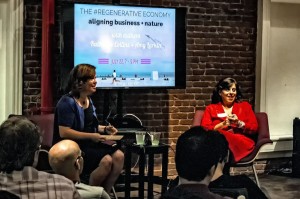
It also has a growing number of followers, as I could see last week at an event titled “Biomimicry + the Regenerative Economy.” Organized by BiomimicryNYC, a network dedicated to fostering a community of nature-inspired practice in the New York City metro region, it took place at Impact Hub NYC with more than 100 attendees who came to learn more about aligning business with nature from two experts in this field: Amy Larkin and Katherine Collins.

… Amy Larkin, founder of Nature Means Business and author of “Environmental Debt: The Hidden Costs of a Changing Global Economy,” was the first to go on stage. One of the main topics she focused on was harmonizing the laws of business with the laws of nature…

Read the rest of the article here

Radical cooperation is the only antidote to climate chaos

First published in the Guardian on June 20th, 2014

Throughout the 20th century, millions of people banded together in nonviolent revolutions across the globe to secure their freedom. From India to Czechoslovakia, South Africa to Poland, they declared their right to self-determination. Why, in the 21st century, are so few of us ready to fight together to secure our right to clean air and water?

To wake us from our fossil-fueled dreams, we need nothing less than radical cooperation.

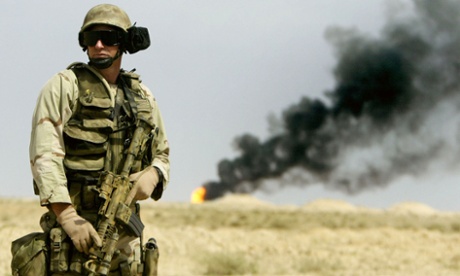
Given the scope and importance of the conflict, it’s notable that many of the most poignant voices calling for a more holistic view of climate change are in fact battle-tested veterans of war. In a new report,National Security and the Accelerating Risks of Climate Change, an all-star array of retired US military brass weighs in, writing that “The potential security ramifications of global climate change should be serving as catalysts for cooperation and change. Instead, climate change impacts are already accelerating instability in vulnerable areas of the world and are serving as catalysts for conflict.”

What moves people to cooperative action? Environmental activists and scientists often ask how they can get Americans to care about climate change. And, on the other end of the spectrum, many business people are trying to encourage both their customers and Wall Street to work with them on solutions.

Meanwhile, those of us fighting to stave off climate chaos are working to send a palatable message, telling one another that we cannot scare people to death and that alarmism is ineffective. But watch The Weather Channel. Read the business news. Follow the agricultural commodity markets or your region’s farming news. Climate change’s high impact traumas and costs on people, planet and

Fossil fuels and peace don’t mix

First published in the Guardian on June 4th, 2014.

Why doesn’t anyone do anything about the situation in Ukraine?

One reason is that Russia supplies one third of the European Union’s oil and gas. The EU, in turn, represents 20% of the world’s economy, and any precipitous rise in the energy prices they pay is a very scary proposition.

In other words, oil and gas are both the fueling impetus for Vladimir Putin’s current forays and the reason for subsequent global inaction.

Russia is hardly alone. On the other side of Asia, China is risking a hot war with Vietnam in order to plant an oil rig in disputed waters. No nations have come to Vietnam’s side. Meanwhile, Russia and China have just signed a $400bn deal for 30 years of natural gas supply and demand. This alliance creates an economic and defensive bloc that could limit the rest of the world’s move towards safe energy development.

China’s $400bn bet on natural gas added to its central role as the world’s top manufacturer and primary emerging market, create a conflict. If the world chooses to place a price on carbon, which is desperately needed, China and Russia now have an alliance against other economies that might want to incentivize safer renewable energies.

Some of the world’s great oil reserves are on land governed by repressive regimes and dictators, including the House of Saud, Vladimir Putin, Sudanese warlords and Mahmoud Ahmadinejad. The pipelines and ports to transport this oil go through lands of every geo-political leaning, from Canada, whose tar sands aim to serve the US, to Kazakhstan, whose pipeline to China is now being expanded.

Oil and gas wars (hot, cold and economic) will only intensify as at

Go to Top